BAMRG Members Report
BAMRG Members Report - January 2025
Ukraine
In the 18th century, some regions of Ukraine were incorporated into the Russian Empire. In 1918, Ukraine declared its independence, but in 1921, it was annexed by Russia once again. The devastating agricultural collectivisation campaign under Stalin in 1932 resulted in the deaths of millions. During World War II, Ukraine experienced Nazi occupation, and approximately five million Ukrainians lost their lives fighting against Nazi Germany.
In 1991, Ukraine declared independence from the former Soviet Union. In 2005, the “Orange Revolution,” a series of protests and political events that led to the annulment of a fraudulent presidential election and the establishment of a more democratic government, brought Ukrainians greater press freedoms and more open political mechanisms. In 2014, Russia annexed Crimea, and pro- Russian forces in eastern Ukraine seized part of Donetsk and Luhansk in eastern Ukraine.
On February 24, 2022, Russia invaded Ukraine. This invasion escalated a conflict that started in 2014 when Russia annexed Crimea, and fighting began in eastern Ukraine. Since then, millions of people have been forced to flee their homes, and over 30,000 civilians have died.
Around one million soldiers are serving in the military, and an estimated 43,000 soldiers have been killed. In this challenging context, the work of the thousands of chaplains serving the military is of utmost importance. They provide psychological, moral, practical, and spiritual support on the front lines and rear. They visit military units and speak and pray with the soldiers. So crucial is this work that the Ukrainian government has recognised it.
The Ukrainian Bible Society supports military chaplains by publishing and distributing special edition Bibles, New Testaments, and children’s Bibles in Ukrainian and Russian for soldiers. President Zelensky of Ukraine recently recognised the Bible Society’s efforts and thanked its leaders for providing these Bibles.
Your regular gift to Bible a Month will significantly enhance this project. With your support, we directly impact the lives of soldiers and the chaplains who serve them. Together, we are making a difference!
An Update From the Frontline in Ukraine!
Prayer Points for Ukraine
Pray for military chaplains who risk their lives ministering to those on the frontline and for soldiers and their families that they will be impacted by Scripture.
Pray for Ukrainians, 50 per cent of whom are currently without heating or electricity due to attacks on infrastructure, for the elderly, disabled and children who are suffering under these conditions.
Give thanks that amid the horrors of war, there is an extraordinary demand for Bibles and Ukrainians are searching for hope, encouragement and faith.
Give thanks that Ukraine has a long Christian heritage, including being known as the “Bible belt” of the Soviet Union during the Soviet era.
Pray more with us here.
FURTHER BIBLE MISSION PROJECTS
Colombia
The region of modern-day Colombia was originally inhabited by Chibcha tribes who were displaced by the Spanish in the 15th century. In 1508, the Franciscans arrived followed by the Dominicans in 1529. In the 18th century, Bogota became the centre of power for Colombia, Panama, Venezuela, and Ecuador. In 1819, Colombia declared independence from Spain.
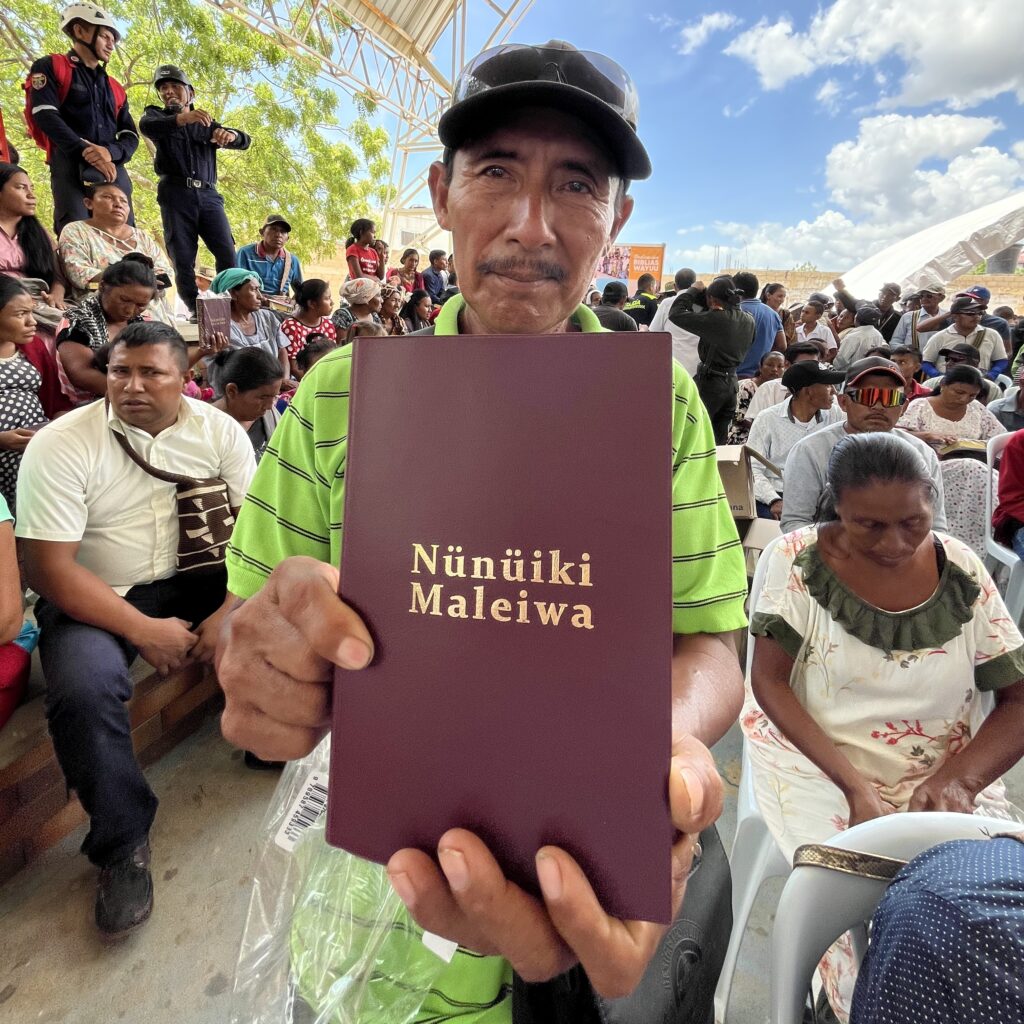
Under the 1991 constitution, Colombia became a secular state with freedom of religion, which saw the growth of the Evangelical Church especially among the poor. The Colombian Bible Society is working to eliminate Bible poverty by distributing Bibles to indigenous groups, it is translating the Bible into indigenous languages, and it is providing trauma healing programmes.
Latvia
In the 12th century, Christianity reached Latvia via German missionaries. In the 16th century, Lutheranism arrived. Today, 30 per cent of the population identify as Lutheran. Latvia has been ruled by many countries including Germany, Denmark, and Russia. It had a brief period of independence from Russia (1917 – 1940) before being reconquered by Stalin, who either liquidated or forcibly removed much of the population. Christianity has faced many challenges including persecution under both the Nazis and the Communists, and secularisation. The Latvian Bible Society is creating a revised version of the Latvian Bible, which it will promote through church visits, and by creating online materials to enable the younger generation to engage with it.
Zimbabwe
In the 16th century, Christianity reached Zimbabwe with the arrival of Portuguese missionaries. Today, 85 per cent of the population identify as Christian. In the 1880s, the country came under British rule. In 1980, Zimbabwe gained official independence with Robert Mugabe as the first Prime Minister. Since then, Zimbabwe has experienced gross economic mismanagement with corruption and the seizing of white-owned farms-an economic pillar-sending the country into an economic death spiral. It has experienced hyperinflation and mass unemployment. The Bible Society of Zimbabwe is translating the Bible into the Chikunda and Tonga languages, along with creating a Zimbabwean Sign Language Bible. It provides Braille Bibles for children attending a Braille rehabilitation centre.
Paraguay
Paraguay was originally inhabited by the Guarani people. In the 16th century, the Spanish arrived bringing with them the Jesuits who established 30 mission stations. Today, 93 per cent of Paraguayans identify as Christian. In 1811, Paraguay declared its independence from Spain. In the post-colonial period, Paraguay has known civil war, military coups, and two devastating wars with surrounding nations (1864-70) and (1932-35).
In the 20th century, Paraguay was under a military dictatorship for 35 years which ended in 1989. Since 1999, the Paraguayan Bible Society has been assisting impoverished communities along the Paraguay River by building schools and providing doctors. Currently, they are training local church leaders to run weekly Bible study classes along the river.