BAMRG Members Report
BAMRG Members Report - April 2025
Slovenia
The Republic of Slovenia is a small country with a population of only two million. Yet, it is strategically important because it controls some of Europe’s major transit routes. For centuries, Slovenia was dominated by Austria, becoming a part of the Yugoslav Federation in 1918. In 1991, it achieved independence and in 2004 it became a part of the EU.
In the 9th century, Christianity reached Slovenia brought there by Saints Cyril and Methodius, two brothers who were sent by Byzantine Emperor Michael III to evangelise the Slavic peoples. They brought with them a new alphabet that would eventually become known as Cyrillic.
Over time, Christianity spread throughout Slovenia via trade routes, pilgrimage sites, and monastic communities. The arrival of Protestantism during the Reformation era greatly impacted Slovenian society as it led to increased education and literacy rates among its people. Despite periods of persecution under communist rule during much of the 20th century, Christianity remained a vital part of Slovene identity.
Today, 70 per cent of Slovenians identify as Christian, the majority of whom are Catholic. However, the Church is also suffering from increased secularism and spiritual apathy. Another contributing factor is that there are very few Christian books available in Slovene, the national language.
The Bible Society of Slovenia is partnering with churches to help reinvigorate the faith of lay people by establishing small Bible reading groups to deepen Bible engagement. This includes providing participants with a Journaling New Testament with special Bible helps.
Your gift to Bible a Month Regular Giving this month will help to support this project.
Prayer Points for Slovenia
Pray for young people who sometimes lack perseverance to get involved in the Bible reading groups.
Pray that parish priests will be receptive to the idea of the groups and for small group leaders to be raised up.
Pray that the Church in Slovenia would not decline into irrelevance, and that Slovenes would break free from spiritual apathy and look to Jesus.
Pray for more means for Slovenes to engage with the gospel such as radio, Christian bookshops, Christian magazines and books.
Pray more with us here.
FURTHER BIBLE MISSION PROJECTS
Argentina
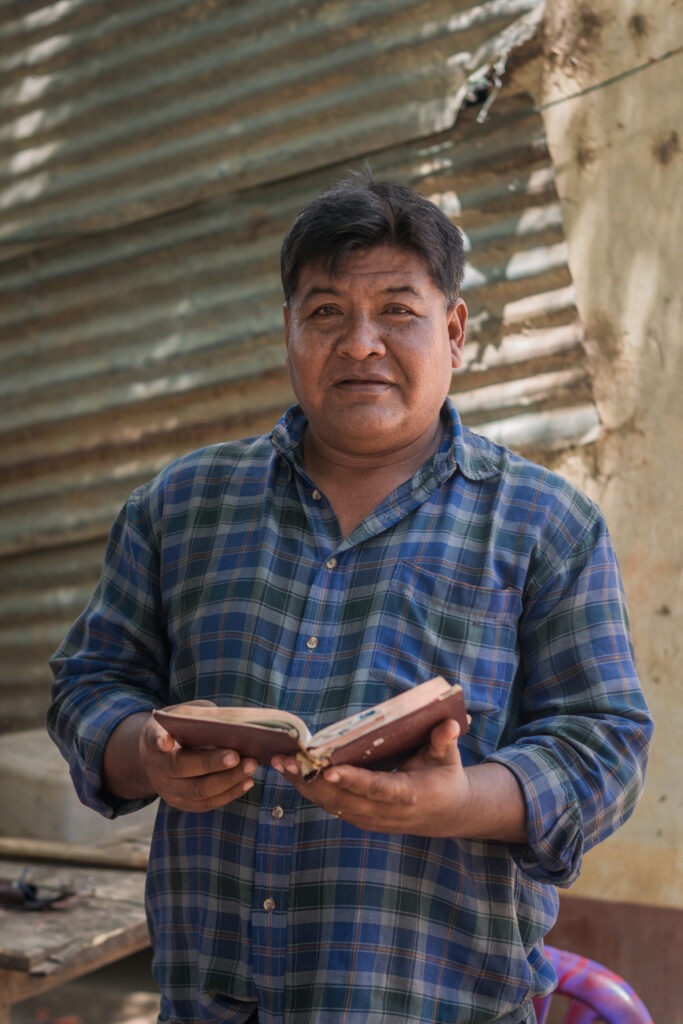
Prior to colonisation, Argentina was inhabited by indigenous peoples including the Mapuche and the Quechua. In the 16th century, Jesuit missionaries played a key role in converting indigenous peoples to Christianity. In 1816, Argentina gained independence from Spain. In the 20th century, Argentina experienced military coups, populism and the Dirty War (1976 – 1983), a period of state terrorism against opponents of the junta.
Today, 49 per cent of Argentinians profess Christianity. The Argentine Bible Society is working to translate the Bible into indigenous languages and into Argentina Sign Language. It is working to engage children with biblical stories by training volunteers who will act out the stories in settings such as churches and schools.
Benin
Prior to colonisation Benin was ruled by powerful kingdoms, notably the Dahomey, known for its military and trade, including involvement in the transatlantic slave trade. In 1894, France colonised the area. In 1960, Benin gained independence. Between 1972 – 1990 the country came under a Marxist-Leninist regime until democracy was restored.
Christianity in Benin traces back to the 16th century with Portuguese missionaries, but it gained significant ground in the 19th century through European missions. Despite the dominance of traditional African beliefs, Christianity grew, particularly under French colonial rule. Today 49 per cent of the population identify as Christian. The Bible Society of Benin is working to translate the Bible into the languages of Gun and Aja.
Bulgaria
Bulgaria’s history dates to ancient Thracian civilisations, and it was later ruled by Rome and Byzantium. In the 4th century, Christianity was brought to Bulgaria by Saints Cyril and Methodius. In Ad 864, it became dominant when Tsar Boris I of the First Bulgarian Empire (681 – 1018) adopted Eastern Orthodox Christianity. The Second Bulgarian Empire (1185–1396) fell to the Ottomans, who ruled for nearly 500 years.
In 1878, Bulgaria gained independence, later aligning with the Soviet bloc. In 1989, communism ended, and Bulgaria is now a democratic nation and a member of the EU. Today, 65 per cent of Bulgarians identify as Christian. The Bulgarian Bible Society is currently revising the Bulgarian Protestant Bible.
Cameroon
Cameroon’s history includes early African kingdoms before Portuguese explorers arrived in the 15th century. At the same time Portuguese missionaries brought Christianity to the area, but Christianity expanded significantly in the 19th century through European Catholic and Protestant missions. In 1884, Germany colonised the region, but after World War I, it was divided between British and French control.
Gaining independence in 1960–1961, Cameroon became a unified republic. It has since experienced political stability, though tensions persist between its French- and English-speaking regions. Today, 66 per cent of the population identify as Christian. The Bible Society of Cameroon is working to translate the Bible into indigenous languages, such as Mungaka, Parkwa and Mafa.