BAMRG Members Report
BAMRG Members Report - October 2025
Bangladesh
The Bengal region was once home to powerful empires such as the Maurya, Gupta, and Pala dynasties. Hinduism was established by the 3rd century with Islam arriving in the 12th century. By the 16th century, Bengal came under the Mughal Empire – an Islamic Empire leading a majority Hindu population.
Christianity entered Bengal in the 16th century with Portuguese missionaries. In the 18th and 19th centuries, Protestant missionaries established schools, hospitals, and churches. Though Christians remain a small minority—less than one per cent in a Muslim-majority country— they have played a significant role in education and health care.
In the 18th century, British colonial rule began after the Battle of Plassey (1757). In 1947, Bengal was divided during the partition of India. East Bengal became East Pakistan under Muslim-majority Pakistan. Growing tensions led to the Liberation War of 1971, which saw Bangladesh achieve independence, with support from India.
Since then, Bangladesh has faced challenges of poverty, natural disasters, and political instability. Today, the population comprises 99 per cent Bengali people with one per cent consisting of ethnic minority groups, including the Santal, Garo, Chakma, Bawm, Marma, Pankhua, Tripura, and Sadri peoples.
Recognising their need for Scripture in their heart languages, the Bangladesh Bible Society (BBS) has launched a multi-year project to translate, print, and distribute the Bible among these ethnic groups. Not only will this support faith, but it will also preserve culture, foster literacy, and create a sense of inclusion for historically marginalised communities. Your gift to Bible a Month Regular Giving will help to support this project this month.
Prayer Points for Bangladesh
Pray that the newly translated Bibles bring a deep sense of spiritual connection and ignite a passion for literacy, education, and cultural preservation among the tribal groups.
Give thanks that, despite persecution, churches have been able to show the love of Christ through environmental, social justice and humanitarian work.
Pray for wisdom among Bangladesh’s political leaders, that political divisions and unrest may give way to stability and good governance.
Pray for continued economic growth that benefits the poor and vulnerable, especially those working in the garment industry and rural communities.
Pray more with us here.
FURTHER BIBLE MISSION PROJECTS
Burkina Faso
Burkina Faso was once home to powerful kingdoms such as the Mossi. In the late 19th century, the French colonised the area, naming it the Upper Volta.
Christianity also arrived during the colonial period. Today, Christians make up 26 per cent of the population. In 1960, the country achieved independence, which was followed by political instability and coups. In 1984, the country was renamed Burkina Faso—meaning “the land of the upright people.”
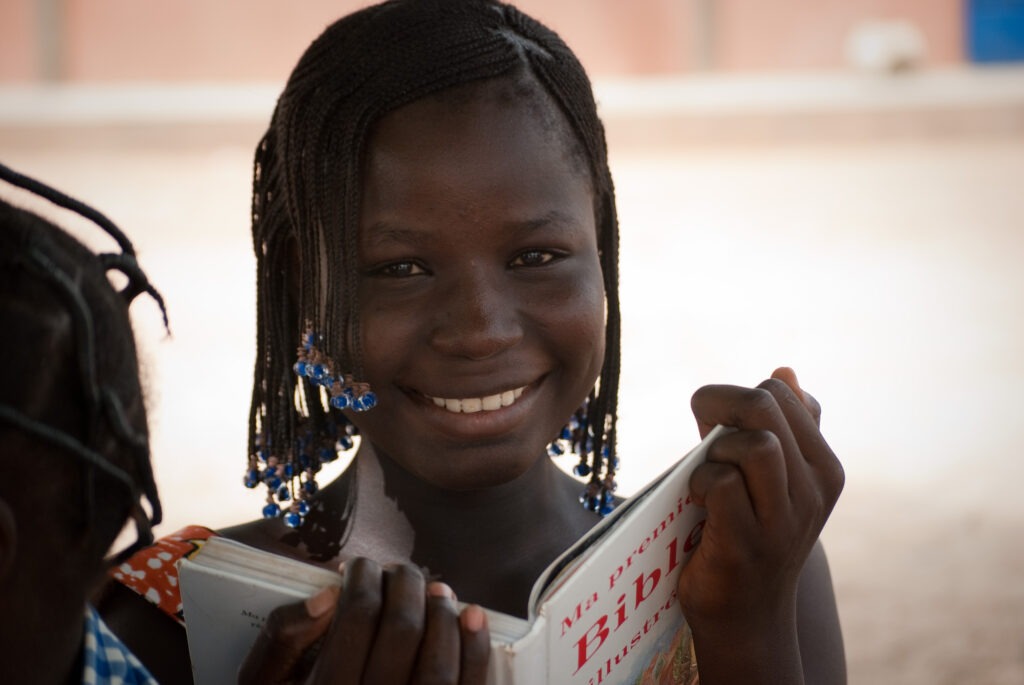
The population has a low literacy rate of 30 per cent. The Bible Society of Burkina Faso is empowering women by running literacy classes. It is running audio healing trauma groups, and it is translating the Bible into the language of Birifor.
Egypt
Egypt developed along the Nile around 3100 BC when Upper and Lower Egypt were unified under the first pharaoh. It has a rich legacy including the pyramids and hieroglyphic writing. Over the centuries, Egypt was ruled by the Persians, Greeks, and Romans, becoming a major hub of trade and culture. Christianity spread rapidly in the 1st century AD, with Alexandria emerging as a major theological hub. In the 7th century, Arab armies introduced Islam. Later, Ottoman and then British rule influenced Egypt until independence in 1952.
Today, 10 per cent of the population identify as Christian. The Bible Society of Egypt is facilitating evangelistic outreach by providing subsidised Bibles, New Testaments and Scripture selections.
The South Pacific
The South Pacific region, encompassing island nations such as Fiji, Samoa, Tonga, and Vanuatu, has a rich history shaped by waves of migration from Asia thousands of years ago. Distinct Polynesian, Melanesian, and Micronesian island cultures developed. European explorers arrived in the 16th–18th centuries, followed by traders, colonisers, and missionaries. Christianity spread widely during the 19th century, often reshaping societies and displacing traditional beliefs, yet it became deeply embedded in culture and identity. Today, most South Pacific nations are Christian, while retaining vibrant Indigenous traditions and customs.
The Bible Society in the South Pacific is endeavouring to reach people with a Bible in a format of their choice and encouraging Bible engagement.
Australia
Australia’s history spans over 60,000 years, beginning with Aboriginal and Torres Strait Islander peoples who developed diverse languages and cultures. European contact began in the 17th century, and in 1788 Britain established a penal colony in Sydney. Colonisation led to profound disruption and displacement of Indigenous communities.
In 1901, the colonies united to form the Commonwealth of Australia. In 1986, the Australia Act ended most remaining legal ties to Britain. Today, Australia is a large, modern, multi-cultural country. Around 38 per cent of the population identify as Christian. The Bible Society Australia is seeking to translate the Bible into Indigenous languages, half of which have no Scripture. It is providing Bible sets for Bible in School classes.